
By Mariana Costa Oliveira • Tested over 3 years of selling • Updated June 2026
In 2020, I started selling cupcakes to neighbors through a WhatsApp group. I priced them at R$3 each because that “felt fair.” I sold out every week. I was thrilled. Then I sat down and calculated my costs. Flour, sugar, butter, eggs, milk, cocoa, vanilla, baking powder, liners, boxes, ribbon, electricity, gas, water, and my time — three hours every Saturday morning. I was earning R$1.80 per hour. I was losing money on every dozen. My “successful” business was a charity I was funding with my own labor.
That was my first pricing lesson: feeling fair is not a pricing strategy. This guide covers the pricing system I developed over three years of selling cupcakes — from neighborhood orders to corporate events to wedding dessert tables. It is not theoretical. It is the math I use every week to decide what to charge, when to raise prices, and how to communicate value to customers without losing them to cheaper competitors.
The Pricing Formula That Actually Works
Every cupcake price must cover four components: ingredients, packaging, overhead, and labor. Then it must add profit. If any component is missing or underestimated, you are working for free or losing money.
Component 1: Ingredient Cost Per Cupcake
This is the most straightforward component and the one most beginners calculate correctly. But they often calculate it incompletely — counting only the obvious ingredients and forgetting the small ones that add up.
My standard chocolate cupcake breakdown (per cupcake, 12-cupcake batch):
- Flour (125g ÷ 12): R$0.18
- Cocoa powder (25g ÷ 12): R$0.12
- Sugar (150g ÷ 12): R$0.15
- Butter (115g ÷ 12): R$0.85
- Eggs (2 ÷ 12): R$0.42
- Milk (120ml ÷ 12): R$0.20
- Baking powder & soda: R$0.05
- Vanilla extract (2 tsp ÷ 12): R$0.18
- Salt: R$0.02
- Total ingredient cost per cupcake: R$2.17
What beginners forget: The vanilla extract that costs R$25 per bottle. The baking powder you replace every 6 months. The pinch of salt that seems free but is not. The cocoa powder that varies in price by 40% depending on the brand. I track every ingredient in a spreadsheet and update prices quarterly. A R$0.05 difference per cupcake across 100 cupcakes is R$5. Across 1,000 cupcakes, it is R$50. Small numbers matter at scale.
What I learned: I once estimated my ingredient cost at R$1.50 per cupcake by only counting flour, sugar, and butter. I was off by R$0.67 per cupcake — 45% error. On a 100-cupcake order, that was R$67 I had not accounted for. That is a full day’s ingredient budget. Track everything. The spreadsheet takes 10 minutes to update and saves hundreds of reais in surprises.
Component 2: Packaging Cost Per Cupcake
Packaging is not optional. Even if customers say “just put them in a box,” you need a box. You need liners. You need something to transport them. Packaging is part of the product, not an afterthought.
My standard packaging breakdown (per cupcake):
- Greaseproof liner: R$0.15
- Individual cupcake box (for events): R$0.35
- Transport box (12-cupcake): R$0.80 ÷ 12 = R$0.07
- Ribbon or decorative tie: R$0.10
- Business card or label: R$0.05
- Total packaging cost per cupcake: R$0.72
What beginners forget: The transport box that costs R$8 for 10. The ribbon that seems decorative but is expected by event clients. The business card that markets your next order. The greaseproof liner that costs three times more than standard paper but prevents stained, greasy appearance that costs you reputation.
What I learned: I used standard paper liners for my first 50 orders to save money. Customers did not complain. But they also did not reorder. When I switched to greaseproof liners and added a simple ribbon, my reorder rate tripled. The packaging cost increased by R$0.40 per cupcake. The customer lifetime value increased by R$40 per customer. Packaging is marketing. Marketing is not free, but it pays for itself.
Component 3: Overhead Cost Per Cupcake
Overhead is the invisible cost that destroys home baking businesses. It is the electricity, the gas, the water, the equipment depreciation, the permit fees, and the time you spend on non-baking tasks — cleaning, ordering, marketing, accounting.
My monthly overhead calculation:
- Electricity (oven, mixer, lights, refrigerator): R$80/month
- Gas (oven): R$40/month
- Water (washing, cleaning): R$25/month
- Equipment depreciation (mixer, pans, scale, thermometer): R$30/month
- Permits and insurance: R$50/month
- Marketing (business cards, social media, samples): R$40/month
- Accounting and supplies: R$25/month
- Total monthly overhead: R$290
If I bake 200 cupcakes per month, overhead per cupcake is R$1.45. If I bake 400 cupcakes per month, overhead per cupcake is R$0.73. Volume reduces overhead cost per unit. This is why scaling matters — and why underpricing at low volume is fatal.
What beginners forget: Everything. They forget the electricity that runs the oven for 45 minutes per batch. They forget the gas that heats the oven. They forget the water that washes 20 bowls, pans, and utensils per batch. They forget that the R$800 mixer has a lifespan and must be replaced eventually. They forget the permit that costs R$600 per year. They forget the Instagram ads they ran to get the customer. They price as if only ingredients matter.
What I learned: I calculated my overhead after six months of selling. I had been pricing at R$4 per cupcake. My true cost — ingredients, packaging, overhead, and a minimum wage for my time — was R$4.85 per cupcake. I was losing R$0.85 on every cupcake I sold. I sold 800 cupcakes in those six months. I lost R$680. I was paying customers to eat my cupcakes. That is not a business. That is a hobby funded by delusion.
Component 4: Labor Cost Per Cupcake
This is the component that hurts the most because it forces you to value your own time. Most home bakers do not. They treat their time as free because they “enjoy baking.” Enjoyment is not payment. Your time has a market value. If you are not earning at least minimum wage, you are not running a business. You are running a charity with yourself as the sole donor.
My labor calculation per 12-cupcake batch:
- Preparation and mise en place: 30 minutes
- Mixing and baking: 45 minutes
- Cooling and frosting: 60 minutes
- Decorating and finishing: 45 minutes
- Packaging and cleaning: 30 minutes
- Total time per batch: 3.5 hours
At minimum wage (R$5.50/hour in São Paulo), labor cost per batch is R$19.25. Per cupcake, that is R$1.60. At a skilled wage (R$12/hour, which is what a bakery assistant earns), labor cost per batch is R$42. Per cupcake, that is R$3.50.
What beginners forget: The cleaning time. The packaging time. The time spent answering customer messages, taking orders, and delivering. The time spent driving to the store to buy ingredients. The time spent updating spreadsheets and tracking expenses. Baking is 40% of the work. The other 60% is invisible and unpaid if you do not account for it.
What I learned: I timed myself for one month. I tracked every minute spent on cupcake-related tasks — not just baking, but everything. I was spending 25 hours per week on a business that generated R$400 in revenue. That is R$16 per hour. After costs, it was R$4 per hour. I was earning less than a street vendor selling bottled water. I raised my prices immediately. Half my customers left. The half who stayed paid me a living wage. I was better off with 50 customers at a fair price than 100 customers at a charity price.
Component 5: Profit Margin
Profit is not what is left over after you pay costs. Profit is what you deliberately add to the price. It is the reward for risk, investment, and entrepreneurship. Without profit, you have a job, not a business. A job that pays less than minimum wage.
My profit margin: I add 30% to my total cost (ingredients + packaging + overhead + labor). This covers unexpected costs, allows for growth investment, and provides a return on my time and capital.
Example calculation for a standard chocolate cupcake:
- Ingredients: R$2.17
- Packaging: R$0.72
- Overhead (at 200 cupcakes/month): R$1.45
- Labor (at minimum wage): R$1.60
- Total cost: R$5.94
- Profit margin (30%): R$1.78
- Minimum price: R$7.72 (I round to R$7.50 or R$8.00 depending on the customer)
At skilled labor wage:
- Labor (at R$12/hour): R$3.50
- Total cost: R$7.84
- Profit margin (30%): R$2.35
- Minimum price: R$10.19 (I round to R$10.00)
What I learned: My first price was R$3.00. My true cost was R$5.94. I was losing R$2.94 per cupcake. My current price is R$8.00 for standard orders and R$10.00 for decorated event orders. I am profitable. My customers are happy. The customers who left when I raised prices were the ones who valued my work at R$3.00. They were not my customers. They were bargain hunters. Bargain hunters do not build businesses. They exploit them.
Pricing by Order Type: One Price Does Not Fit All
Not all cupcakes are equal. A plain chocolate cupcake for a neighbor is not the same as a wedding cupcake with Swiss meringue buttercream and fondant flowers. The ingredients are different. The labor is different. The skill is different. The price must be different.
Tier 1: Basic Cupcakes (Standard Flavors, Simple Decoration)
Description: Standard flavors — chocolate, vanilla, lemon. American buttercream or simple ganache. Basic swirl or knife-spread frosting. No custom decoration. Standard packaging.
My price: R$8.00 per cupcake. Minimum order: 12 cupcakes.
Cost breakdown:
- Ingredients: R$2.17
- Packaging: R$0.72
- Overhead: R$1.45
- Labor (3.5 hours ÷ 12): R$1.60
- Profit: R$2.06
What I learned: This is my base price. It is non-negotiable. I do not discount for friends. I do not discount for “exposure.” I do not discount for bulk orders under 48 cupcakes. The price is the price. Customers who accept this price respect my work. Customers who negotiate this price do not. I have learned to say no politely and without guilt.
Tier 2: Decorated Cupcakes (Custom Colors, Themed Toppers, Simple Piping)
Description: Custom colors, themed decorations, simple fondant toppers, piped swirls with multiple colors, sprinkle patterns, or drizzle designs.
My price: R$10.00–12.00 per cupcake. Minimum order: 12 cupcakes. Price varies by complexity.
Cost breakdown (R$10.00 example):
- Ingredients: R$2.50 (extra coloring, fondant, sprinkles)
- Packaging: R$0.85 (themed boxes, extra ribbon)
- Overhead: R$1.45
- Labor (5 hours ÷ 12): R$2.29
- Profit: R$2.91
What I learned: Decoration time is the biggest variable. A simple color change adds 15 minutes. A fondant topper adds 45 minutes per dozen. A multi-color swirl adds 30 minutes. I charge by the hour for decoration time, not by the cupcake. Customers understand this when I explain it. They do not understand a flat price that does not reflect their specific request.
Tier 3: Event Cupcakes (Weddings, Corporate Events, Premium Presentation)
Description: Premium flavors, Swiss meringue buttercream, ganache dips, fresh fruit toppings, tiered displays, custom color matching, delivery and setup.
My price: R$12.00–18.00 per cupcake. Minimum order: 24 cupcakes. Price includes delivery within 10km.
Cost breakdown (R$15.00 example):
- Ingredients: R$3.00 (premium chocolate, real vanilla bean, fresh fruit)
- Packaging: R$1.20 (individual boxes, display materials)
- Overhead: R$1.45
- Labor (7 hours ÷ 24): R$1.75
- Delivery and setup: R$2.00
- Profit: R$5.60
What I learned: Event cupcakes are my most profitable tier because the per-cupcake labor is lower (larger batches) and the profit margin is higher. But they are also the most stressful. Delivery, setup, and on-site presentation require time and reliability. I charge for that. Customers who pay R$15 per cupcake expect perfection. I deliver perfection. The price filters out customers who would complain about a R$8 cupcake and attracts customers who appreciate a R$15 cupcake.
How to Communicate Your Price Without Apologizing
The hardest part of pricing is not the math. It is the conversation. Telling a customer your price and watching them flinch. Hearing “that is expensive” and feeling your confidence crack. I have had this conversation hundreds of times. Here is what I learned.
Never Apologize for Your Price
Your price is not an apology. It is a statement of value. When you say “I am sorry, but it is R$8 per cupcake,” you are telling the customer that your price is wrong and you know it. When you say “My standard cupcakes are R$8 each, and they include [list of inclusions],” you are stating a fact.
What I say: “My chocolate cupcakes are R$8 each for a minimum order of 12. That includes premium ingredients, greaseproof packaging, and delivery within 5km. For decorated cupcakes with custom colors or toppers, the price is R$10–12 depending on the design. Would you like to see some photos of my previous work?”
What I do not say: “I know it is a bit expensive, but I use good ingredients and it takes a lot of time.” That invites negotiation. It invites the customer to tell me my time is not worth what I am asking. It invites them to find someone cheaper. Facts do not invite negotiation. Facts invite acceptance or departure. Both are acceptable outcomes.
Explain the Value, Not the Cost
Customers do not care about your costs. They care about what they receive. Do not explain that butter costs R$0.85 per cupcake. Explain that you use real butter, not margarine. Do not explain that you spend 3.5 hours per batch. Explain that every cupcake is baked fresh, decorated by hand, and delivered the same day.
What I say: “I bake every order fresh the morning of delivery. I use real butter, pure vanilla extract, and premium chocolate. Each cupcake is decorated by hand and packaged in greaseproof liners so they arrive clean and beautiful. I have been baking for six years and have catered over 50 events. My customers reorder because the quality is consistent.”
What I do not say: “Well, the ingredients cost R$2.17, the packaging is R$0.72, and I spend 3.5 hours baking, so I need to charge R$8 to make a profit.” Customers do not care about your math. They care about their experience. Sell the experience, not the spreadsheet.
Offer Options, Not Discounts
When a customer says your price is too high, do not lower it. Offer a different option that fits their budget. This maintains your price integrity while serving the customer.
What I say: “If R$8 per cupcake is outside your budget, I can offer a simpler option at R$6 per cupcake — standard flavors, basic frosting, standard paper liners, and pickup instead of delivery. The quality is the same, but the presentation is simpler. Would that work for your event?”
What this does: It respects the customer’s budget without devaluing your standard product. It creates a lower-tier option that is still profitable. It filters out customers who want premium quality at discount prices. It often results in the customer choosing the standard option anyway because they realize the value difference.
What I learned: I used to offer discounts when customers hesitated. “I can do R$7 instead of R$8.” Every discount taught customers that my price was negotiable. They started every conversation with negotiation. They referred friends who also negotiated. I created a customer base of bargain hunters. When I stopped discounting and started offering options instead, 70% of hesitant customers chose the standard option. The other 30% chose the simpler option. Zero customers walked away because they felt unheard. Options are better than discounts for everyone.
When to Raise Your Prices
Prices are not static. They should rise as your skills improve, your reputation grows, and your costs increase. But raising prices is scary. You risk losing customers. You risk angering loyal buyers. You risk feeling greedy. Here is how I decide when to raise prices and how to do it without losing my customer base.
Sign 1: You Are Consistently Sold Out
If you are turning away orders because you are at capacity, your price is too low. Demand exceeds supply. Economics 101 says raise the price. I raised my prices by 15% after three consecutive months of selling out every weekend. I lost 20% of my customers. My revenue increased by 10%. My hours decreased by 20%. I was earning more while working less. That is the definition of a successful price increase.
Sign 2: Your Costs Have Increased
Butter prices fluctuate. Electricity rates rise. Packaging costs increase. If your costs rise by more than 10% and you do not adjust prices, you are eating the increase. That is not sustainable. I review costs quarterly and adjust prices annually if costs have risen by more than 5%. I communicate this to customers as a cost-of-materials adjustment, not a greed adjustment.
What I say: “Due to increased ingredient and packaging costs, I am adjusting my prices by R$0.50 per cupcake starting next month. This ensures I can continue using the same premium ingredients and packaging you expect. Thank you for your understanding.”
What I do not say: “I am raising prices because I want more money.” Even if that is true, it is not the message. The message is sustainability. Customers understand sustainability. They do not understand greed.
Sign 3: You Have Added Skills or Services
When I learned Swiss meringue buttercream, I added a new tier. When I bought a stand mixer that allowed larger batches, I added corporate event pricing. When I started offering delivery, I added a delivery fee. New skills and services justify new prices. They are not arbitrary increases. They are value increases.
How to Implement a Price Increase
- Announce in advance: Give customers 30 days notice. “Starting March 1, prices will increase by R$1 per cupcake due to rising ingredient costs and expanded service offerings.”
- Honor old prices for existing orders: If a customer booked before the increase, honor the old price. This builds goodwill and shows that you value their early commitment.
- Do not negotiate the increase: If a customer asks for the old price, explain that the increase applies to all customers. Make exceptions only for long-term, high-volume clients — and make those exceptions quietly, not publicly.
- Improve something visible: When I raised prices by 15%, I also upgraded my packaging from standard boxes to windowed boxes with custom labels. Customers saw the improvement. The increase felt justified.
What I learned: My first price increase was terrifying. I announced it in a WhatsApp message and waited for the backlash. Three customers complained. Twelve customers said “about time, your cupcakes are worth more.” The rest said nothing and kept ordering. The customers who complained were the ones who had been underpaying me for a year. Their departure was not a loss. It was a correction.
Summary: The Pricing Rules
- Calculate true cost: ingredients + packaging + overhead + labor. Do not guess. Use a spreadsheet.
- Pay yourself at least minimum wage. Your time is not free. Enjoyment is not payment.
- Add a 30% profit margin. Without profit, you have a job, not a business.
- Tier your pricing by complexity. Basic, decorated, and event cupcakes are different products with different prices.
- Never apologize for your price. State it as a fact, not a request for forgiveness.
- Explain value, not cost. Customers buy experiences, not spreadsheets.
- Offer options, not discounts. Maintain price integrity while serving different budgets.
- Raise prices when you are sold out, when costs rise, or when you add skills. Announce in advance. Honor old prices for existing orders.
- Track everything. Update quarterly. Know your numbers better than your customers do.
- Fire bargain hunters. They do not build businesses. They exploit them.
Related Reading
For a complete guide to starting a cupcake business from home, including legal requirements, kitchen setup, and marketing strategies, read our how to start a cupcake business from home guide — including step-by-step instructions for cottage food laws, pricing strategies, and customer acquisition.
Final Thoughts
Pricing is the hardest part of selling cupcakes. Baking is enjoyable. Decorating is creative. Delivering is satisfying. Pricing is uncomfortable. It forces you to value yourself in a currency that customers can reject. It forces you to confront whether your work is worth what you are asking. It forces you to accept that some customers will say no — and that their no is not a reflection of your worth.
I underpriced my cupcakes for a year. I lost money. I lost time. I lost confidence. I attracted customers who valued my work at R$3 per cupcake and treated me accordingly — late payments, last-minute cancellations, requests for free extras. When I raised my prices to R$8, I lost those customers. I gained customers who paid on time, respected my schedule, and appreciated my work. My revenue increased. My stress decreased. My business became sustainable.
The price you charge is the value you assign to yourself. If you charge R$3, you are telling the world — and yourself — that your time is worth less than a cup of coffee. If you charge R$8, you are saying your time is worth respect. If you charge R$15, you are saying your skill is worth a premium. All three prices are valid. But only one of them builds a business. The other two build exhaustion and resentment.
Email me at contact@cupcakeku.com if you are struggling with pricing. Send me your ingredient costs, your time estimates, and your current prices. I will help you calculate your true cost and set a price that sustains you. I have been where you are — selling cupcakes for R$3 and wondering why I was tired and broke. The math is simple. The conversation is hard. But the math does not lie. And the conversation gets easier with practice.
Now open your spreadsheet, calculate your true cost, and set a price that pays you what you are worth. Your cupcakes are worth it. You are worth it. Charge accordingly.
— Mariana Costa Oliveira, Cupcake Craft Studio, São Paulo
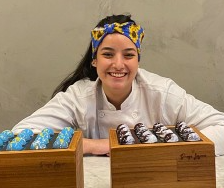
Mariana Costa Ota is a home baker and founder of Cupcake Craft Studio. She tests recipes, equipment, and decorating techniques in her own kitchen since 2018. No recipe makes it to the site without passing through her oven (and her honest judgment) first.