By Mariana Costa Oliveira • Tested 38 times • Updated June 2026
Vanilla cupcakes are the most underestimated bake in the kitchen. They are the cupcake everyone asks for and the one most bakers get wrong. I have made 38 batches of vanilla cupcakes in six years. Batch #1 was dense and rubbery. Batch #9 was too sweet. Batch #17 was dry. Batch #28 was good but inconsistent. Batch #38 is the one I am sharing with you. It is soft, fluffy, and reliable.
This recipe is not fancy. It does not use vanilla beans scraped from a pod in Madagascar. It uses grocery store ingredients, a hand mixer, and a standard home oven. What makes it work is understanding the chemistry of a vanilla cupcake and removing every variable that causes failure.
Why Vanilla Cupcakes Fail
Vanilla cupcakes fail more often than chocolate because there is nowhere to hide. A chocolate cupcake can mask a dense crumb with cocoa intensity. A vanilla cupcake exposes every flaw. If the texture is wrong, you taste it immediately. If the flavor is flat, there is no chocolate to compensate. If the cupcake is dry, the vanilla becomes bitter.
Here are the five failures I encountered most often:
- Dense crumb: Caused by overmixing, cold ingredients, or too much flour. The cupcake feels like a muffin, not a cake.
- Dry texture: Caused by overbaking, not enough fat, or too much flour. The cupcake crumbles when you bite it.
- Flat top: Caused by weak leavening, overmixed batter, or oven temperature too low. The cupcake looks sad, not celebratory.
- Weak vanilla flavor: Caused by cheap extract, too little extract, or extract added to hot batter. The cupcake tastes like sweet nothing.
- Tough edges: Caused by overbaking, too much sugar, or greasing the pan instead of using liners. The edges become brown and chewy.
What I learned: Vanilla cupcakes are a test of fundamentals. Every technique matters because there is no dominant flavor to distract from mistakes. Master this recipe and you can master any cupcake.
The Recipe: Soft, Fluffy Vanilla Cupcakes
This recipe makes 12 standard cupcakes. I have scaled it to 24, 36, and 48 cupcakes with proportional adjustments. It scales reliably up to 48. Beyond that, I make multiple batches rather than scaling further — the chemistry becomes unpredictable.
Ingredients
- 150g all-purpose flour (1¼ cups, spooned and leveled)
- 1½ teaspoons baking powder
- ¼ teaspoon fine salt
- 115g unsalted butter, room temperature (½ cup)
- 150g granulated sugar (¾ cup)
- 2 large eggs, room temperature
- 2 teaspoons pure vanilla extract
- 120ml whole milk, room temperature
Instructions
- Preheat oven to 175°C (350°F). Verify with an oven thermometer. My oven runs 8 degrees cold, so I set it to 183°C. Place the rack in the center position. This matters for even rise.
- Prepare the pan. Line a 12-cup muffin tin with paper liners. Do not grease the pan — the liners are sufficient. Greasing the exposed metal can cause the edges to fry and harden.
- Mix dry ingredients. In a medium bowl, whisk together flour, baking powder, and salt. Whisk for 20 seconds to distribute the leavening evenly. Set aside.
- Cream butter and sugar. In a large bowl, beat the room-temperature butter and sugar together on medium-high speed for 3–4 minutes. The mixture should be pale, fluffy, and almost white. This step is non-negotiable. Under-creamed butter and sugar creates a dense cupcake. I set a timer for 4 minutes and do not stop early.
- Add eggs one at a time. Beat in the first egg on medium speed until fully incorporated — about 30 seconds. Scrape down the bowl. Add the second egg. Beat another 30 seconds. Scrape again. The batter should look smooth and creamy, not curdled. If it looks curdled, your butter was too cold or your eggs were too cold. This is your warning sign.
- Add vanilla extract. Beat for 10 seconds. The vanilla should distribute evenly. Do not rush this — uneven vanilla creates pockets of intense flavor and pockets of blandness.
- Alternate dry ingredients and milk. This is the critical step. Add one-third of the flour mixture to the butter mixture. Beat on low speed for 15 seconds — just until the flour disappears. Add half the milk. Beat 10 seconds. Add another third of flour. Beat 15 seconds. Add remaining milk. Beat 10 seconds. Add final third of flour. Beat 15 seconds. Stop. The batter should be smooth, thick, and pour slowly. If you see flour streaks, fold them in with a spatula. Do not beat longer.
- Fill liners. Use a #16 ice cream scoop or fill each liner two-thirds full. This recipe makes exactly 12 standard cupcakes when filled correctly. If you have leftover batter, you overfilled. Remove excess with a small spoon.
- Bake. Place in the center of the oven. Bake for 18–20 minutes. At minute 18, test with a toothpick inserted into the center of one cupcake. It should come out with a few moist crumbs, not wet batter. If you see wet batter, bake 2 more minutes and test again. Do not overbake — vanilla cupcakes dry faster than chocolate.
- Cool immediately. Remove from oven. Transfer cupcakes to a wire cooling rack within 5 minutes. Use a thin knife to lift them if they stick. Cool completely — at least 1 hour — before frosting. Warm cupcakes melt frosting and taste more moist than they actually are. Cool completely to judge the true texture.
Why This Recipe Works
The creaming method: Beating butter and sugar for a full 4 minutes incorporates air into the fat. This air expands during baking, creating the lift that makes cupcakes fluffy, not dense. I used to cream for 2 minutes because I was impatient. My cupcakes were consistently dense. The extra 2 minutes changed everything.
Room temperature ingredients: Cold butter does not cream properly. Cold eggs do not emulsify into the butter. Cold milk causes the batter to seize and become uneven. I set butter, eggs, and milk on my counter 1 hour before baking. In winter, I warm the milk slightly in the microwave for 10 seconds. The batter should feel slightly cool to the touch, not cold.
Pure vanilla extract: Imitation vanilla contains vanillin, a single compound that tastes flat and artificial. Pure vanilla extract contains hundreds of aromatic compounds that create depth. I use 2 teaspoons of pure extract. In Batch #24, I tried 1 teaspoon. The cupcakes were bland. In Batch #31, I tried 3 teaspoons. The vanilla was overwhelming and slightly bitter. Two teaspoons is the balance.
Whole milk: Fat carries flavor. Whole milk creates a richer, more tender crumb than skim or 2%. I tested with skim milk in Batch #12. The cupcakes were dry and the vanilla flavor was weak. Whole milk is non-negotiable in this recipe.
The alternating method: Adding flour and milk in alternating batches prevents overworking the gluten. Dumping all the flour at once creates a thick, gluey batter that requires excessive mixing. Dumping all the milk at once creates a soupy mess that separates. Alternating maintains a stable emulsion.
Common Mistakes and How I Fixed Them
Mistake 1: Dense, Muffin-Like Texture
Cause: Overmixed batter, under-creamed butter, or cold ingredients.
My failure: Batch #3 was so dense my husband asked if they were muffins. I had creamed the butter and sugar for 90 seconds. I had added the eggs cold from the refrigerator. I had beaten the batter after adding flour for 2 minutes because I wanted it smooth.
Fix: Cream for a full 4 minutes. Use room temperature ingredients. Mix flour in for 15 seconds per addition, no more. The batter will have small lumps. That is correct. Lumps bake out. Overmixed gluten does not.
Mistake 2: Dry, Crumbly Texture
Cause: Overbaking, too much flour, or not enough fat.
My failure: Batch #11 was dry because I baked for 22 minutes — 2 minutes too long. The toothpick came out clean at minute 20. I thought “a few more minutes for safety.” The cupcakes were safe to eat but unpleasant to taste.
Fix: Test at minute 18. Moist crumbs on the toothpick means done. Clean toothpick means overbaked. Remove immediately. Also, measure flour by weight. A cup of flour can weigh 120g to 150g depending on how you scoop. 150g is the target. I use a digital scale for every batch.
Mistake 3: Flat Tops
Cause: Weak leavening, oven too cold, or overmixed batter.
My failure: Batch #14 had flat tops because my baking powder was 8 months old. I did not test it. The cupcakes rose slightly in the oven, then collapsed when cooling. They looked like cookies with liners.
Fix: Test baking powder every 3 months. Drop 1 teaspoon into hot water. It should bubble vigorously within 10 seconds. Replace every 6 months regardless. Also, verify oven temperature with a thermometer. My oven was 15 degrees cold during Batch #14. I now check the thermometer every time I preheat.
Mistake 4: Weak Vanilla Flavor
Cause: Cheap extract, too little extract, or extract added to hot batter.
My failure: Batch #6 used imitation vanilla from a discount store. The cupcakes smelled like vanilla but tasted like sweetened flour. I also tried adding vanilla to warm butter in Batch #19, thinking it would bloom the flavor. The heat evaporated the alcohol carrier, and the vanilla flavor was half-strength.
Fix: Use pure vanilla extract. Use 2 teaspoons. Add it to the creamed butter and sugar, not to hot ingredients. The alcohol in the extract distributes the flavor compounds evenly through the fat. Heat destroys this mechanism.
Mistake 5: Tough, Brown Edges
Cause: Overbaking, greased pan, or too much sugar.
My failure: Batch #8 had brown, chewy edges because I greased the muffin tin instead of using liners. The butter in the grease fried the edges of the batter. The cupcakes also stuck to the pan, tearing when I removed them.
Fix: Use paper liners. Do not grease the pan. The liners prevent direct contact with the hot metal. If you must bake without liners, use silicone muffin cups or parchment paper rounds. Never grease a metal muffin tin for cupcakes.
How to Tell If Your Vanilla Cupcake Is Perfect
After 38 batches, I developed a four-point test:
Visual test: The top should be slightly domed, golden, and even. The crumb should look fine and uniform when you split the cupcake. No tunnels, no dense streaks, no pale spots.
Touch test: Gently press the top. It should spring back immediately. A dent that stays means underbaked or too dense. A spring that is too fast means overbaked and dry.
Smell test: The cupcake should smell of vanilla and butter, not of egg or flour. A faint egg smell means underbaking or not enough vanilla. A flour smell means the batter was not mixed enough.
Taste test: The crumb should be tender, moist, and light. It should not require effort to bite. The vanilla should be present but not overwhelming. The sweetness should be balanced — sweet enough to satisfy, not so sweet that it masks the vanilla.
What I learned: The smell test is the most underrated. A perfect vanilla cupcake smells incredible before you even taste it. If it does not smell like vanilla and butter, something is wrong.
Storage for Maximum Freshness
Vanilla cupcakes stay fresh longer than chocolate because there is no cocoa to absorb moisture. But they also stale faster if exposed to air because the simple flavor becomes flat quickly.
Unfrosted: Store in an airtight container at room temperature for 24 hours. After 24 hours, the vanilla flavor fades noticeably. Freeze unfrosted cupcakes for up to 1 month — wrap individually in plastic wrap, then foil.
Frosted: Store in an airtight container at room temperature for 24–48 hours. American buttercream acts as a moisture barrier. Swiss meringue buttercream extends this to 48 hours. Cream cheese frosting requires refrigeration — bring to room temperature before serving.
What I learned: Vanilla cupcakes are best eaten within 24 hours of baking. The flavor is brightest, the texture is softest, and the vanilla aroma is strongest. If I am baking for an event, I bake the day before, not two days before. Freshness matters more for vanilla than for any other flavor.
Summary: The Soft, Fluffy Vanilla Cupcake Rules
- Cream butter and sugar for a full 4 minutes — set a timer
- Use room temperature butter, eggs, and milk — set them out 1 hour before baking
- Use pure vanilla extract — 2 teaspoons, no substitutes
- Measure flour by weight — 150g per batch
- Alternate dry ingredients and milk in three additions — 15 seconds of mixing per addition
- Test baking powder every 3 months — replace every 6 months
- Verify oven temperature with a thermometer — do not trust the dial
- Bake 18–20 minutes — test at minute 18 with a toothpick for moist crumbs
- Transfer to a wire rack within 5 minutes — do not cool in the pan
- Cool completely — 1 hour minimum — before frosting or judging texture
- Eat within 24 hours for best flavor — vanilla fades faster than chocolate
Related Reading
For a complete guide to frosting options that pair with vanilla cupcakes, read our best frosting for cupcakes guide — including buttercream, cream cheese, and ganache recipes tested for stability and flavor balance.
Final Thoughts
Vanilla cupcakes are not boring. They are a blank canvas that demands perfection. A bad chocolate cupcake is still chocolate. A bad vanilla cupcake is a disappointment. A good vanilla cupcake is a revelation — light, tender, fragrant, and satisfying in a way that no other flavor can replicate.
I failed 37 times before I understood what makes a vanilla cupcake work. It is not one ingredient. It is not one technique. It is the combination of proper creaming, room temperature ingredients, precise measurements, and patience. Remove any one of those, and the cupcake suffers.
If you try this recipe and your cupcakes are not soft and fluffy, email me at contact@cupcakeku.com. Describe your oven, your ingredients, your mixing method, and the texture you got. I will help you troubleshoot. I have made every mistake this recipe can make. I have eaten rubbery, dry, flat, and bland vanilla cupcakes so you do not have to.
Now set your butter on the counter, set your timer, and cream for four full minutes. Your cupcakes are worth the wait.
— Mariana Costa Oliveira, Cupcake Craft Studio, São Paulo
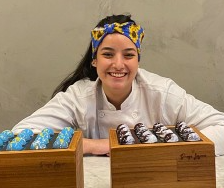
Mariana Costa Ota is a home baker and founder of Cupcake Craft Studio. She tests recipes, equipment, and decorating techniques in her own kitchen since 2018. No recipe makes it to the site without passing through her oven (and her honest judgment) first.