By Mariana Costa Oliveira • Tested over 6 years • Updated June 2026
When I started baking cupcakes in 2018, I thought tools were the answer to every problem. I bought a digital scale, an oven thermometer, a cooling rack, a set of measuring spoons, and a pastry brush in my first month. I spent R$180 on tools before I had baked my 10th batch. Some of those tools changed my baking immediately. Others sat in a drawer for two years before I touched them again. The difference between useful tools and useless tools is not price or brand. It is whether they solve a specific problem you actually have.
This guide covers the baking tools that have made the biggest difference in my cupcake results. I have excluded the obvious — you already know you need bowls, spoons, and an oven. I have included the tools that separate consistent results from inconsistent ones, the tools that prevent the specific failures I experienced in my first year, and the tools that are worth buying even if they seem unnecessary at first.
Every tool here costs under R$100. Most cost under R$50. None are specialty items that require training to use. They are the tools that turned my baking from occasional success to reliable consistency.
Tool 1: Digital Kitchen Scale (The Most Important Tool I Own)
A digital scale is the single tool that improved my cupcakes more than any other. It eliminated the variable that caused more failures than any other technique: inconsistent measuring.
Why Volume Measuring Fails
Measuring cups are convenient but imprecise. A cup of flour can weigh anywhere from 120g to 150g depending on how you scoop it. Dip the cup into the bag and you pack in 150g. Spoon flour into the cup and level it and you get 125g. Sift first and you get 115g. That 35g difference — more than 25% — changes the hydration of your batter, the texture of your crumb, and the height of your rise.
I failed five batches in my first month because of flour measurement alone. Three were too dry. Two were too dense. The recipes were identical. My measuring was not.
What a Digital Scale Does
A digital scale measures by weight, not volume. 150g of flour is always 150g of flour. It does not matter how you scoop it, how you pack it, or how humid your kitchen is. The weight is constant. The results become consistent.
How I use it:
- Place the mixing bowl on the scale and tare (zero) it.
- Add flour until the scale reads the exact gram amount.
- Tare again. Add sugar.
- Tare again. Add butter.
- Every ingredient is precise. Every batch is identical.
What to Buy
I use a basic digital scale with 1g precision and a 5kg capacity. It cost R$45. It has a flat platform, a tare button, and the ability to switch between grams and ounces. That is all you need.
Features that matter:
- 1g precision — you need to measure small amounts like baking powder accurately
- Tare function — essential for adding multiple ingredients to one bowl
- Flat platform — bowls sit securely without tipping
- Easy-to-read display — backlit if your kitchen lighting is dim
Features that do not matter:
- Bluetooth connectivity — unnecessary for home baking
- Built-in timer — your phone has a better timer
- Stainless steel body — plastic is fine and lighter
- Multiple unit conversions — grams and ounces are sufficient
My recommendation: Buy any digital scale with 1g precision and a tare button. The brand does not matter. I have used three different brands over six years. They all performed identically. The R$45 scale and the R$120 scale gave me the same results. The difference was aesthetics, not accuracy.
What I learned: I resisted buying a scale for six months because I thought it was “too serious” for home baking. I was wrong. It is the most casual, most forgiving tool I own. It removes stress. It removes guessing. It removes the anxiety of “did I measure that right?” Every baker who struggles with consistency should buy a scale before buying any other tool.
Tool 2: Oven Thermometer (The Tool That Exposed My Biggest Problem)
My oven was lying to me. It said 175°C. It was actually 160°C. I baked 12 batches of cupcakes in that oven before I discovered the truth. Every batch was slightly underbaked, slightly dense, and slightly flat. I blamed the recipe. I blamed the flour. I blamed my technique. The problem was my oven.
Why Oven Temperature Matters
Oven temperature affects every aspect of cupcake baking:
- Too cold: Cupcakes rise slowly, then collapse because the structure sets too late. The crumb is dense and rubbery.
- Too hot: Cupcakes rise too fast, then crack or dome excessively. The edges burn while the center is raw.
- Inconsistent: Some cupcakes in the pan are done while others are raw. The back of the oven is hotter than the front.
Most home ovens are inaccurate by 10–25 degrees. Some are worse. My first oven was 15 degrees cold. My second oven was 20 degrees hot in the back and 10 degrees cold in the front. I would not have known either without a thermometer.
What an Oven Thermometer Does
An oven thermometer sits inside your oven and tells you the actual temperature. It does not rely on the oven’s built-in sensor, which is often located in a different part of the oven than where your cupcakes bake.
How I use it:
- Place the thermometer in the center of the oven rack, where the cupcakes will sit.
- Preheat the oven for 20 minutes.
- Check the thermometer reading. If it says 165°C when the oven dial says 175°C, I know my oven runs 10 degrees cold.
- I adjust the dial accordingly. For 175°C actual, I set the dial to 185°C.
- I check the thermometer every few months to confirm the calibration has not drifted.
What to Buy
I use a basic dial oven thermometer that hangs from the oven rack. It cost R$25. It has a large, easy-to-read face and a hook that attaches to the rack wire.
Features that matter:
- Easy to read at a glance — large numbers, high contrast
- Stable placement — hangs securely or stands firmly without tipping
- Wide temperature range — at least 100°C to 300°C
- Durable construction — can withstand oven heat without warping
My recommendation: A dial thermometer is more reliable than a digital one for oven use. Digital thermometers have batteries that fail in heat and sensors that can drift. A dial thermometer is mechanical, simple, and lasts indefinitely. I have used the same one for five years. It still reads accurately.
What I learned: I bought an oven thermometer after my 12th failed batch. I was frustrated and ready to quit baking. The thermometer revealed that my oven was the problem, not me. That discovery changed everything. I went from inconsistent results to reliable results overnight. The thermometer was the best R$25 I have ever spent on baking.
Tool 3: Cooling Rack (The Tool That Prevents Soggy Bottoms)
I cooled my first six batches of cupcakes in the pan. The bottoms were always slightly soggy, slightly dense, and slightly darker than the tops. I thought that was normal. It is not. It is the result of trapped steam.
Why Cooling Matters
When cupcakes come out of the oven, they are still releasing steam. If they sit in the pan, that steam has nowhere to go. It condenses on the bottom of the cupcake, creating moisture that makes the crumb dense and the liner soggy. It also continues to cook the bottom slightly, creating a darker, firmer base.
A cooling rack allows air to circulate under the cupcakes. The steam escapes upward and downward. The cupcakes cool evenly. The bottoms stay as light and tender as the tops.
What to Buy
I use a wire cooling rack with a grid pattern, not parallel wires. The grid supports mini cupcakes and prevents them from falling through. It cost R$35.
Features that matter:
- Grid pattern, not parallel wires — supports all cupcake sizes
- Sturdy construction — does not sag under a full tray of cupcakes
- Non-stick coating — easy to clean, prevents rust
- Stackable design — if you bake multiple batches, stackable racks save space
My recommendation: Buy one large cooling rack or two medium racks. One rack holds 12 standard cupcakes. If you bake 24 at a time, you need two racks or a stackable set. I own two medium racks and stack them when baking large orders. The top rack sits on legs that rest on the bottom rack, creating vertical space without horizontal spread.
What I learned: I cooled cupcakes on a wooden cutting board for my first month. The bottoms were always slightly steamed. I thought that was just how cupcakes were. When I bought my first cooling rack, the difference was immediate. The bottoms were light, tender, and identical to the tops. I threw out my cutting board cooling method and never looked back.
Tool 4: Ice Cream Scoop (The Tool That Creates Consistency)
My first cupcakes were wildly inconsistent in size. Some were domed mountains. Some were flat discs. Some overflowed the liners. Some were barely half full. The problem was not the recipe. It was my filling method. I was using a spoon and eyeballing the amount.
Why Consistent Filling Matters
When cupcakes are filled to different levels, they bake differently:
- Overfilled: Overflow the liner, create mushroom tops, take longer to bake, and have raw centers
- Underfilled: Small, flat, overbaked, and dry
- Inconsistent: Some are done while others are raw. Some are dry while others are moist. The tray is a mess of different sizes and textures.
A consistent fill level creates consistent baking. Every cupcake rises the same amount, bakes in the same time, and finishes with the same texture.
What an Ice Cream Scoop Does
An ice cream scoop with a release mechanism (a lever that sweeps across the bowl, releasing the contents) measures the same amount of batter every time. You fill the scoop, level it with a spatula, and release it into the liner. The amount is identical for every cupcake.
How I use it:
- Fill the scoop with batter using a spatula.
- Level the batter across the top of the scoop with the flat edge of the spatula.
- Position the scoop over the liner and squeeze the release lever.
- The batter drops cleanly into the liner, filling it two-thirds full.
- Repeat for all 12 liners. Every cupcake has the same amount of batter.
What to Buy
I use a #16 ice cream scoop, which holds approximately 3 tablespoons or 45ml of batter. This fills a standard cupcake liner two-thirds full — the ideal level for most recipes. It cost R$30.
Scoop sizes:
- #20 scoop (2.5 tablespoons): For mini cupcakes or when you want smaller standard cupcakes
- #16 scoop (3 tablespoons): The standard for standard cupcakes. Two-thirds full. My default.
- #12 scoop (4 tablespoons): For jumbo cupcakes or when you want a fuller standard cupcake
- #10 scoop (5 tablespoons): For very large cupcakes or muffin-tin recipes
My recommendation: Start with a #16 scoop. It is the most versatile size for standard cupcakes. If you bake mini cupcakes frequently, add a #20. If you bake jumbo cupcakes, add a #12. The #16 handles 90% of my baking.
What I learned: I used a spoon for my first 20 batches. My cupcakes were always slightly different sizes. Some were done at 18 minutes. Some needed 22. The scoop eliminated that variation. Every cupcake now bakes in exactly 20 minutes. The consistency is worth the R$30 investment.
Tool 5: Microplane or Fine Grater (The Tool That Elevates Flavor)
Citrus zest is the secret ingredient that transforms basic cupcakes into memorable ones. But zest from a box grater is coarse, bitter, and uneven. Zest from a microplane is fine, aromatic, and dissolves into the batter. The difference is not subtle. It is the difference between a cupcake that tastes like lemon and a cupcake that tastes like lemon Pledge.
Why Zest Quality Matters
Citrus zest contains the essential oils that give citrus its flavor. The outer yellow layer is fragrant and sweet. The white pith underneath is bitter and harsh. A coarse grater shreds both layers together, creating bitter, chunky zest. A microplane removes only the yellow layer, creating fine, aromatic zest that blends into the batter without adding bitterness.
How I use it:
- Hold the citrus fruit in one hand and the microplane in the other.
- Grate in one direction, rotating the fruit as you go.
- Stop when you see white pith. Do not grate the pith.
- Tap the microplane to release the zest into the bowl.
- The zest is so fine it dissolves into the batter during mixing.
What to Buy
I use a standard microplane grater with a handle and a protective cover. It cost R$40. It is also useful for grating chocolate, nutmeg, and ginger.
My recommendation: A microplane is not essential for basic baking. But if you make lemon, orange, or lime cupcakes — or if you grate chocolate for ganache — it is transformative. I resisted buying one for a year, using a box grater instead. When I finally bought a microplane, my lemon cupcakes improved immediately. The zest was finer, the flavor was brighter, and there was no bitter aftertaste. It is now one of my most-used tools.
What I learned: I made lemon cupcakes with a box grater for 8 months. Guests always said they were “good.” When I switched to a microplane, guests started saying “these are incredible.” The tool did not change the recipe. It changed the flavor extraction. That is the power of the right tool.
Tool 6: Silicone Spatula Set (The Tool That Prevents Waste)
I used wooden spoons for my first year of baking. They were fine. But they left batter in the bowl, they did not scrape the sides effectively, and they were hard to clean. When I switched to silicone spatulas, my batter yield increased, my mixing became more thorough, and my cleanup time decreased.
Why Silicone Spatulas Matter
Silicone spatulas are flexible, heat-resistant, and shaped to scrape bowls clean. They bend to match the curve of the bowl, removing every bit of batter. They do not absorb flavors or odors. They go in the dishwasher. They last for years.
How I use them:
- Large spatula: For folding batter, scraping bowls, and transferring batter to the pan
- Small spatula: For scraping the last batter from the bowl, smoothing frosting, and detailed work
- Spoonula (spoon-shaped spatula): For scooping thick batters and doughs
What to Buy
I use a set of three silicone spatulas — large, small, and spoonula. The set cost R$35. They are heat-resistant to 230°C, dishwasher-safe, and come in colors that help me designate one for sweet baking and one for savory cooking.
My recommendation: Buy a set of at least two — one large and one small. The large one handles mixing and scraping. The small one handles details and cleanup. A spoonula is useful but not essential. Avoid spatulas with wooden handles — they can warp and harbor bacteria in the joint between wood and silicone.
What I learned: I used a wooden spoon for my first year and left about 10% of every batter in the bowl. With a silicone spatula, I scrape the bowl clean. Over 100 batches, that 10% adds up to significant ingredient savings. The spatulas paid for themselves in reduced waste.
Tool 7: Pastry Brush (The Tool for Glazes and Syrups)
A pastry brush is not essential for basic cupcake baking. But it becomes essential when you start working with glazes, simple syrups, and fruit toppings. It applies liquid evenly, thinly, and without disturbing the surface of the cupcake.
When You Need a Pastry Brush
- Simple syrup: Brushing cooled cupcakes with flavored syrup adds moisture and flavor
- Glaze: Applying a thin glaze to the top of a cupcake creates shine and flavor
- Fruit topping: Brushing fresh fruit with apricot jam creates a professional sheen and prevents drying
- Ganache smoothing: Brushing ganache with warm water creates a mirror finish
What to Buy
I use a silicone pastry brush with fine bristles. It cost R$15. Silicone bristles do not shed into the food, do not absorb flavors, and clean easily in the dishwasher. Avoid natural bristle brushes — they shed, absorb odors, and are hard to clean thoroughly.
My recommendation: Buy one silicone pastry brush when you start working with glazes or fruit toppings. It is not needed for basic frosted cupcakes. But when you advance to decorated cupcakes with fruit, ganache, or syrup layers, it becomes essential.
What I learned: I tried applying simple syrup with a spoon for my first syrup-brushed cupcakes. The syrup pooled in some spots and was absent in others. The cupcakes were unevenly moist. A pastry brush solved this immediately. The application was thin, even, and controlled. The cupcakes were uniformly moist.
Summary: Tools by Priority
| Priority | Tool | Cost | Why It Matters |
|---|---|---|---|
| 1 (Essential) | Digital kitchen scale | R$45 | Eliminates measuring inconsistency, the #1 cause of failure |
| 2 (Essential) | Oven thermometer | R$25 | Reveals your oven’s true temperature, preventing underbaking and overbaking |
| 3 (Essential) | Cooling rack | R$35 | Prevents soggy bottoms and uneven cooling |
| 4 (Highly Recommended) | Ice cream scoop (#16) | R$30 | Creates consistent fill levels, eliminating size and baking time variation |
| 5 (Recommended) | Silicone spatula set | R$35 | Prevents waste, improves mixing, reduces cleanup time |
| 6 (Recommended) | Microplane grater | R$40 | Extracts maximum flavor from citrus, chocolate, and spices |
| 7 (Optional) | Silicone pastry brush | R$15 | Essential for glazes, syrups, and fruit toppings |
Related Reading
For a complete guide to liners, pans, and mixers — the foundational equipment for cupcake baking — read our best cupcake liners, pans, and mixers guide. It covers the equipment that holds and bakes your cupcakes, complementing the tools that prepare and finish them.
Final Thoughts
Tools do not make a baker. But the right tools remove the variables that cause failure. A scale removes measuring error. A thermometer removes oven inaccuracy. A cooling rack removes moisture trapping. A scoop removes filling inconsistency. Together, these tools create a system where the only variables are the recipe and your technique — both of which you can control and improve.
I spent R$180 on tools in my first month and used half of them regularly. I spent another R$200 over the next two years, buying tools as specific problems arose. The scale solved my measuring problem. The thermometer solved my oven problem. The cooling rack solved my soggy bottom problem. Each tool was purchased in response to a specific failure, not in anticipation of a hypothetical need.
That is how I recommend you buy tools. Bake first. Fail first. Identify the specific cause of the failure. Then buy the tool that solves it. Do not buy a full set of equipment before you know what you need. Buy tools as problems arise. The tools will mean more because they solve real problems, not imagined ones.
If you have a specific baking problem — inconsistent sizes, soggy bottoms, dry texture, uneven baking — and you are unsure which tool would help, email me at contact@cupcakeku.com. Describe the problem, your current equipment, and your budget. I have experienced most common failures and bought most common tools. I will help you spend your money where it matters.
Now bake with what you have. Buy what you need. Improve one variable at a time. Consistency follows.
— Mariana Costa Oliveira, Cupcake Craft Studio, São Paulo
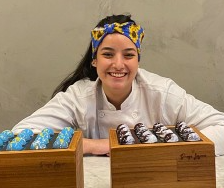
Mariana Costa Ota is a home baker and founder of Cupcake Craft Studio. She tests recipes, equipment, and decorating techniques in her own kitchen since 2018. No recipe makes it to the site without passing through her oven (and her honest judgment) first.